Wine tourism management: how can you organise hospitality without compromising on everything else?
The Impossible Equation
It’s a Saturday in July. A group is due at the wine cellar for a guided tasting at 11.00. Two individual visitors turn up unannounced at 10.30. And there’s still a batch of wine to finish processing before the rain starts.
Managing wine tourism is the art of hosting several groups at the same time without compromising the quality of each experience. A guide leading a tasting cannot simultaneously recount the estate’s history to another group. It’s not a question of organisation — it’s a physical constraint. The real question is: how can we ensure that the group on the tasting receives the guide’s full attention, whilst another group enjoys an independent, rich and engaging experience?
An activity that spans the entire season
The peak season — July and August — accounts for the bulk of visits. But wine tourism doesn’t stop there. Spring attracts enthusiasts keen to see the vineyards in bloom. Autumn, the grape harvest, is a period of high tourist demand at the very time when the team is most focused on production.
The late season – September, October and November – also generates visitor numbers, often of a higher calibre: visitors seeking an authentic experience, fewer crowds and a more personal touch.
Managing wine tourism therefore means managing an activity that lasts almost all year round, with unpredictable peaks, and a team that already has plenty on its plate.
The real problem: it’s impossible to be everywhere
The most common constraint isn’t financial. It’s physical.
Giving a tour of the estate whilst a tasting is taking place in the wine cellar requires two people to be available at the same time. In a small organisation, this is often impossible. In a co-operative winery with slightly more staff, things are better – but the pressure remains high during peak periods.
The result: cancelled tours, visitors left waiting, and staff running themselves ragged rushing from one place to another.
What works in practice
Structuring visitor slots Rather than welcoming visitors on demand throughout the day, some estates set aside dedicated time slots. Visitors know when to come, and the team knows when to be available. Less fragmentation, greater efficiency.
Separating visitor flows Visitors who want to explore the estate at their own pace do not have the same needs as those coming for a guided tasting. Treating them both the same way places an excessive burden on staff for the former and undermines the experience for the latter.
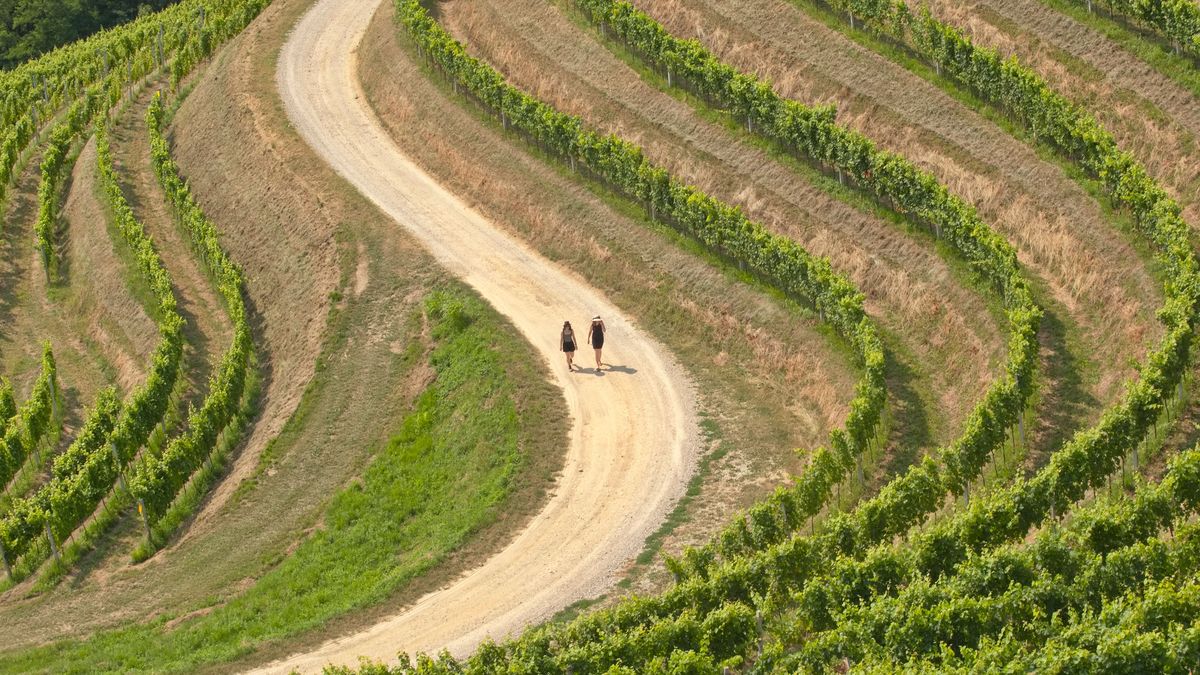
A well-designed self-guided tour – with points of interest, unobtrusive signage and, perhaps, an audio guide – allows you to welcome walk-in visitors without needing someone on hand at all times.
Delegate wisely In small teams, wine tourism management often falls to the same person, who also handles sales, communications and sometimes vineyard work. Identifying what can be automated or delegated — even partially — frees up time for what truly creates value: building relationships, wine tastings and offering advice.
Planning ahead for the season The estates that manage their wine tourism most effectively are those that prepare for the season before it begins. Updating content, training staff, organising time slots, ensuring tools are in place — anything that can be planned for in March helps avoid last-minute rushes in August.
Digital tools as support, not as a substitute
Digital tools are no substitute for a warm welcome. But they can significantly lighten the workload for staff when it comes to certain repetitive tasks.
An audio guide accessible via a QR code, for example, provides commentary on areas open to the public — vineyards, gardens and exhibition spaces. Visitors explore at their own pace, with rich content — stories, anecdotes and the voices of the estate. The guide, meanwhile, can devote themselves fully to the wine tasting and to building personal connections, safe in the knowledge that another group is simultaneously enjoying a high-quality, self-guided experience.
This is no less human. It is simply human time allocated more effectively.
Where to start?
If you’re looking to manage your wine tourism more effectively, start by mapping out your actual constraints:
- At what times is your team under the most pressure?
- What types of visitors arrive without you being able to look after them?
- What tasks are repetitive and could be simplified or automated?
The answers to these questions guide your decisions — whether they relate to organisation, tools or seasonal recruitment.
Xavier Adraste is the founder of Merci Gabin, a platform offering digital audio tours for wine estates. Find out more →